Romance and RTKs

Romance.

It’s probably difficult at every age, but it’s sure as hell difficult in college, where the nicest date I’ve been on was a trip to someone’s frat basement to watch him consume copious amounts of cheap beer and lose at beer pong. Repeatedly.

Is asking for a trip to an actual restaurant too much? Am I crazy for wanting someone to bring me roses on Valentine’s Day and laugh at my dumb jokes (there are many) and tell me I look beautiful when I’m wearing my high school frisbee team sweatpants and my favorite worn grey sweatshirt and I haven’t slept in days? Where is the Ron Stoppable to my Kim Possible, the Harry to my Megan, the Chuck to my Sarah? (If you didn’t get that last reference, I highly recommend checking out the TV show Chuck, although be warned that you will inevitably fall in love with Zachary Levi and then spend several weeks mourning the fact that he’s almost forty years old.) I just want someone to look at me the way Barack looks at Michelle.
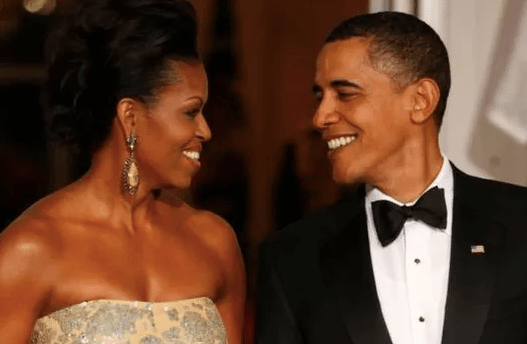
I mean, come on. And their teeth are perfect. Anyway.

Maybe you, dear reader, have already found such a person. In which case, mazel tov. And I hate you. But only a little. Or maybe you’re still searching for someone who thinks you light up their world and who truly believes all your weird quirks are charming instead of just . . . you know . . . weird. In which case, best of luck. I’m right there with you. But whatever your relationship status, if you’re anything like me, you’ve asked for relationship advice from friends, family, and most of all, the internet.

Hopefully, you’ve never had to ask anything like this:

Or this:
(If you want to see more, click here.)

But statistically speaking, you’ve probably googled something like this:
Or this:
A 2019 survey of the most-googled phrases relating to romance found that these were some of the most common questions. It makes sense: first, we want to know how to win over our object of interest. Then, we want to know how to keep them. (I googled “how to kiss a guy” before my first kiss and was directed to a video depicting how to put a condom on a banana. Scarring.)

We – myself included – seek romantic guidance from a myriad of sources, but rarely (if ever) do we turn to our own bodies for the answer. And that’s a mistake.

Ah, you think. This is a post about being in touch with yourself, aware of your body, mindfulness, blah blah blah. Nope. I hate mindfulness, mostly because I’m physically incapable of sitting still and just existing for more than two seconds. Is mindfulness probably good for you? Yes. Am I going to lecture you about it? Definitely not.

(I tried meditating a few times and they all went like this.)

So if I’m not going to lecture you about inner peace, what is this post about? Three words: receptor tyrosine kinases.

Have I lost you already?

Still there?

Good.

I know the topic might sound a bit daunting, but receptor tyrosine kinases (RTKs) are actually a fundamental component of our bodies’ functioning and can teach us a lot about romance. Skeptical? Allow me to explain.

RTKs are enzymes that transfer phosphate groups from ATP (the main source of energy in our bodies) to tyrosine residues, or parts of longer amino acid chains. But which tyrosine residues?

I’m so glad you asked.

RTKs actually work in pairs (aww). When two receptors bind ligands, or a signaling molecules, they dimerize (shown below). That’s a scientific way of saying the two receptors join together and become one.
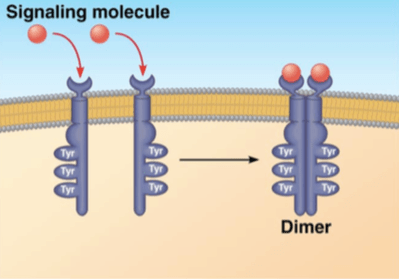
Dimerization activates the tyrosine kinase parts of each receptor – the parts that transfer phosphate onto tyrosine residues. As it turns out, the tyrosine residues they phosphorylate are on their partner monomer (the receptor to which they are bound).
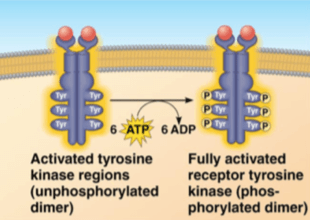
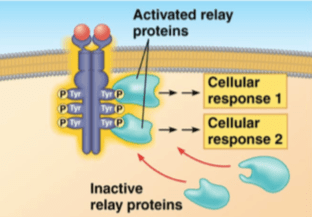
Phosphorylation activates the RTK dimer, which means that the RTK can bind to different relay proteins in the cell. Those proteins bind specific phosphorylated tyrosines and can then activate different pathways in the cell that transcribe genes, activate or inactivate other proteins, and so on. Basically, once the RTK monomers have activated each other, they can cause a cascade of other changes in the cell – all because they initially joined together.
Okay, you think. What does that have to do with romance?

Allow me to shed some light on the subject.

(Bonus points if you got the “Meet the Robinsons” reference.)

Think of the ligands that bind RTKs as whatever might initially make you and your partner attracted to one another: intelligence, humor, pure animal magnetism. You both receive these impulses, so you dimerize – you bind yourselves together. In other words, you’re dating or hooking up or otherwise expressing your mutual attraction. So, you’ve figured out how to get the person. But how do you keep them?

Let’s ask RTKs.

RTKs phosphorylate each other, which activates particular parts. Humans obviously don’t stick different chemicals onto one another to express affection (or at least, they shouldn’t). But, they do use love languages – words of affirmation, quality time, acts of service, and so on. Phosphorylation is essentially an act of service. Both RTKs activate the parts of one another that they know will be most beneficial to the cell, and which are also parts that an individual monomer couldn’t activate on its own. In the same way, people in good relationships support one another by performing acts of service that enhance their partner’s quality of life – whether it’s buying flowers, cooking dinner, or sharing a few words of affirmation. (I’m still taking applications for someone to tell me how amazing I look when I know for a fact that I look like a hot mess.)

I fully admit that this metaphor is a little – okay, a lot – cheesy. But it’s also pretty accurate. And just like with RTKs, when humans are kind to our partners, we can start a ripple effect that changes the lives of many people they encounter, just like the RTKs activate relay proteins.

Okay, that was super cheesy.

But not not true.

So what, you ask again? What does this do? What does this change?

Frankly, not much.

It won’t radically alter your sex life or get you hundreds of new matches on tinder. But hopefully, it’s given you a little insight into romance – both interpersonal and biological. So, next time you’re tempted to google something about relationships, stop for a second and think about what your body has already taught you.

And if that doesn’t work, google the Obamas.

Luke . . . You Have No Father

CW: Star Wars spoilers. (But if you don’t know by now . . . come on.)

It’s one of the most iconic lines in cinema. Five words that brought a generation of sci-fi nerds to their knees:

“Luke . . . I am your father.”*

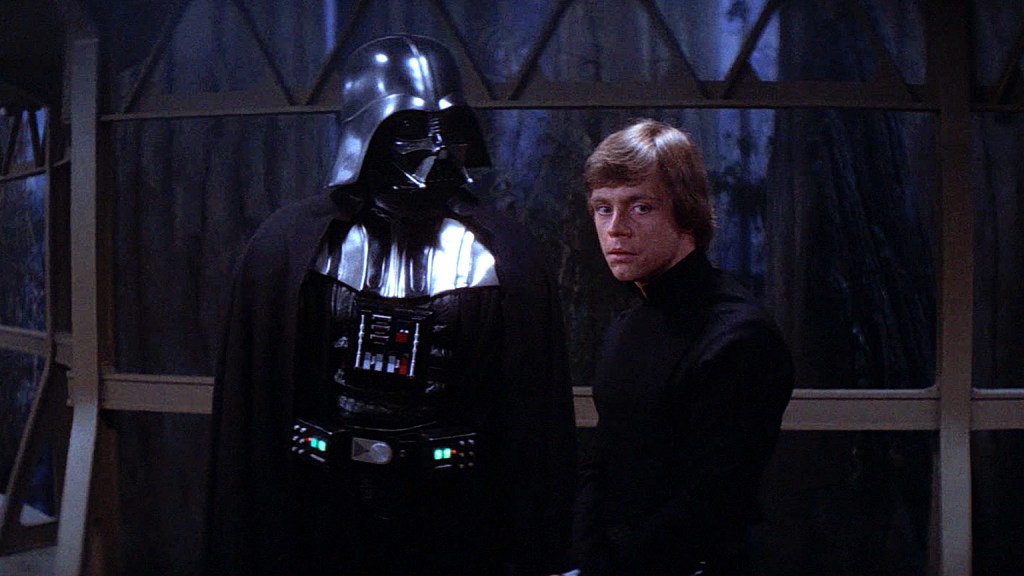
Luke and Vader’s clash of wills is one of the central storylines in Return of the Jedi (the sixth Star Wars movie, for you non-nerds out there). Vader attempts to convince Luke to join the dark side, by turns cajoling and coercing him, but Luke stubbornly holds out hope that there is still goodness left in his father. In the climactic final moments, Emperor Palpatine (the dark side’s HBIC) entreats Luke to kill his father and become a Sith lord.

(Not directly relevant, but this is one of my favorite memes so I had to include it. Also, yes, I know this is Darth Vader and not Emperor Palpatine, but it’s a funny meme, okay? Carry on.)

When Luke refuses to join the dark side, Palpatine begins to torture him. Darth Vader can’t bear to see his son murdered, so in a feat of desperation, he throws the Emperor down a reactor chute to his death . . . but is mortally wounded in the process. In the last moments of Vader’s life, he asks Luke to remove his mask, behind which his face looks weathered and white as the moon. He acknowledges that Luke was right – there was still good in him after all – and dies in his son’s arms. The perfect redemption arc.

Now, I love this storyline as much as anyone. But today I am positing a question that will terrify Star Wars fans everywhere: What if Darth Vader wasn’t Luke’s father? What if Luke had no biological father at all?

Sound crazy? For humans, maybe. But for some animal species, that’s just business as usual.

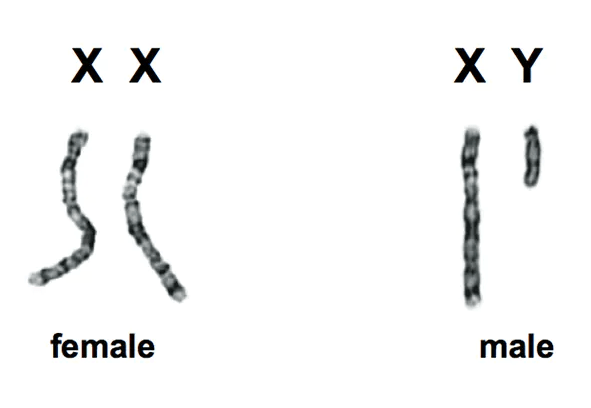
Most people are familiar with the human XX/XY sex determination system. Generally speaking, females inherit two X chromosomes (one from each parent), whereas males inherit one X chromosome from their mother and one Y chromosome from their father.

But most people are much less familiar with other animals’ sex determination systems, and that’s where things really get interesting.

Some animals, such as birds, amphibians, and certain insects, use the Z-W system of sex determination. In this system, only eggs contain sex chromosomes (rather than both eggs and sperm containing them, as in humans). Females’ genotypes, or genetic composition, are ZW and males’ are ZZ. The system that cockroaches, grasshoppers, and other insects use is even more different than ours; they only have one sex chromosome (X) and work off the X-0 system in which females have two X chromosomes (XX) and males have only one (X0). Sorry, males. But the system we’re going to focus on today is even stranger and more fascinating than either of these.

It’s called the haplo-diploid system, and in it, males have no fathers.

You heard me.

But how is that possible, you may ask? I was shocked at first, too. It sounded absurd to me, but most bees and ants have used this system of sex determination for millennia, so who am I to judge?

Here’s how it works.

Rather than specific sex chromosomes determining whether an offspring is male or female, the offspring’s sex is regulated by whether or not the gamete that produces them is fertilized. By “gamete,” I mean a cell that can unite with another cell from the opposite sex and eventually form offspring. For bees and ants, as for humans, that means eggs and sperm. In the haplo-diploid system, if sperm fertilizes a female’s egg, the resulting organism becomes a female. That female is diploid, meaning she has two copies of every chromosome. But if no sperm fertilizes a female’s egg, the egg still develops – and becomes a haploid male (with only one copy of each chromosome).

Can we all take a moment to appreciate that completely absurd biological phenomenon? The unfertilized egg still develops. If that happened in humans, we would flip our shit. Imagine getting pregnant without having sex every single month. It would be madness. But bees and ants do it all the time. The females have two biological parents; the males only have one. Wild.

Now, back to my initial question: What if Luke had no father at all?

As humans, we naturally look to our parents for guidance (even if we subsequently ignore everything they say). Although Darth Vader wasn’t exactly around during Luke’s formative years, Luke’s indefatigable belief in his father’s goodness still guides his actions throughout the sixth Star Wars installment. Darth Vader’s final act – sacrificing himself to save his son – proves that not only can parents have powerful effects on their children, but children can also vastly alter their parents’ trajectories. Without Luke and Vader’s fierce struggle and eventual rapprochement, the Star Wars universe would lose one of its most tragic and beautiful narratives.

So, what if Luke had no father? He wouldn’t have been able to rid the world of a dangerous Sith lord. And if Darth Vader had no son, he likely would have been a member of the dark side until the day he died.

I guess what I’m saying is the haplo-diploid system is fascinating to learn about, but I prefer the XX/XY system, if only because I’m a sucker for a good character arc.

*Darth Vader actually says “No, I am your father” in response to Luke accusing the Sith lord of killing his dad, even though our collective cultural memory says otherwise. Mandela effect, anyone?

Do A Few Bad Apples Really Spoil the Barrel?

When I was a kid, I hated the phrase “a few bad apples spoil the barrel.”

I was full of righteous indignation on behalf of the other apples. It wasn’t their fault that they were shacked up with bruised, browning, spoiled apples. They didn’t do anything wrong! Why should they be spoiled, too, just because of their proximity to the “bad” apples? (Young me was quite the SJW.)

It wasn’t until this year that I realized that saying isn’t always derogatory. It’s also not just a metaphor.

It’s literal.

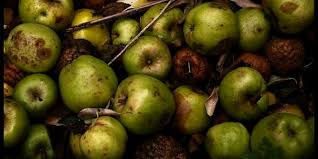
A few bad apples literally spoil the barrel.

This phenomenon is due to a gas called ethylene that acts as a plant hormone – a signaling molecule that regulates plants’ physiology and behavior. I know that sounds complicated, but don’t panic (like I did while studying for the exam).

Ethylene serves several functions in plants and several factors can stimulate plants to produce it, but we’re going to focus on its role in ripening. Initially, fruits are hard, tart, and an unappealing color, which dissuades predators from chowing down on them and destroying the seeds inside. But once the seeds have fully matured, the fruit starts producing ethylene to trigger its ripening. This makes the fruit more appealing to hungry animals, who will hopefully eat it and thereby disperse the seeds (so the plant’s offspring can grow).

How does ripening work, you ask? I’d be delighted to tell you.

Ethylene activates one membrane receptor (ETR1) that’s usually inactive and inactivates another membrane receptor (CTR1) that’s usually active. This triggers a series of steps within cells that results in different genes being expressed and allows the fruit to ripen . . . and eventually spoil.

But how does that affect neighboring fruits – specifically, the other apples in the barrel?

Because ethylene is a gas, it diffuses (the scientific way of saying “travels”) through the air and reaches all the other nearby fruits. This stimulates those fruits to begin creating their own ethylene – a positive feedback loop in which the product of the reactions (ethylene) leads to an increase in the reaction (so the neighboring fruits make even more ethylene). The ethylene that those fruits produce then travels to other nearby fruits and stimulates their ethylene production, and so on and so forth, until each fruit is releasing ethylene.

The result? A few bad apples spoil the barrel.

Okay, you think. I guess that would be useful if I were a farmer. But I’m not a farmer, so what does it have to do with me?

A lot, actually.

I noted at the beginning of this post that the saying “a few bad apples spoil the barrel” is often used as a metaphor. Now that you understand what it means in a literal sense, let’s explore how it can be applied to one of the most polarizing modern political topics: police brutality.

Before we get too mired in this controversial subject, I want to include a caveat: the justice system, racism, and police brutality are incredibly complex issues that are impossible to fully address in a 1,000-word blog post (especially when half of said post is about plant hormones). This is just one piece of a very important and very nuanced puzzle that represents my opinions.

With that said, let’s jump in.

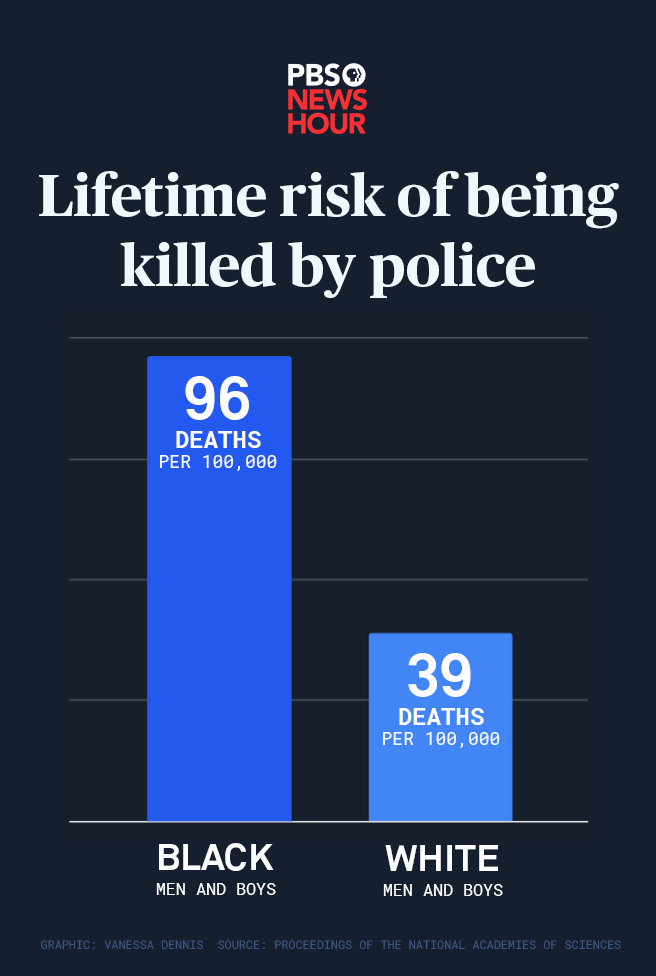
According to CNN, seventy-seven U.S. police officers have been charged with murder or manslaughter since 2005, and only twenty-six have been convicted. A 2019 Proceedings of the National Academies of Science study found that “African American men and women, American Indian/Alaska Native men and women, and Latino men face higher lifetime risk of being killed by police than do their white peers.” It also concluded that the risk is highest for black men, who currently face about a 1 in 1,000 chance of being killed by police – over twice the risk of white men. Finally, the study found that “for young men of color, police use of force is among the leading causes of death.”

Let me repeat that: one of the leading causes of death for young men of color is the law officers who are supposed to protect them.

It’s not like this is a secret. Communities of color – and especially black communities – have had a tenuous relationship at best with police officers for decades. But this is 2020, for heaven’s sake, not 1920. No one should live in fear that an officer charged with protecting them is going to murder them in the name of “standing my ground.”

Several years ago, comedian John Oliver did a segment about the American justice system and police brutality in which he said that “the phrase isn’t ‘it’s just a few bad apples – don’t worry about it.’” He explained that the current American justice system is “set up to ignore bad apples, destroy bad apples’ records, persecute good apples for speaking up and shuffle dangerous, emotionally unstable apples around to the point that children have to attend fucking apple classes. You cannot look at our current situation and claim that anybody likes them apples.”

I couldn’t have said it better myself.

As you now know, dear reader, the bad apples – at least in biology – will always spoil the barrel. It’s inevitable. People are, of course, much more complex, but the same basic theory still applies. Just as ethylene triggers ripening (and spoiling) in nearby fruits, so our justice system encourages other “bad apple” officers to give into their worst instincts without fear of prosecution. By protecting these “bad apples” who enact police brutality and even kill innocent civilians, our criminal justice system enables them to “spoil” (aka inspire) other officers across the nation, who then mimic their indefensible actions.

Unlike in biology, however, it is not too late for us. The ripening that ethylene triggers is inexorable; police brutality is not. But we need to drastically change the incentive structures – and quickly – if we want to have any chance of stopping these bad apples from spoiling the criminal justice system barrel.

A Tamales Cascade

What does a septuagenarian white senator have in common with young Latinx voters?

It sounds like the beginning of an off-color joke, but it’s actually a question that presidential candidate Bernie Sanders takes quite seriously. Although he represents the largely homogenous and well-to-do state of Vermont (the population of which, in 2016, was 95.1% white), Bernie’s political agenda has always prioritized people who do not fit that profile. He has championed the same positions for decades (longer, in fact, than yours truly has been alive) and he has radically transformed the course of American politics.

Bernie’s platforms, such as universal basic healthcare, used to seem so leftist they were almost ludicrous. Now, however, they are widely accepted by the mainstream Democratic party. He has shifted the Overton window – the range of policies politically acceptable to the general population at any given time – more than perhaps any other singular politician in our generation.

But a lot of voters still see him as a crotchety old white guy.

Which he is.

He’s a progressive, electable, funny, crotchety old white guy.

But rather than try to mansplain that distinction to voters, Bernie has recruited the people who are most likely to win over his detractors: their relatives and closest friends. The idea behind these small, intimate events is that people who have doubts about Bernie don’t want to hear him yell at a rally. They want to talk to people they know about concerns close to home – about their jobs, their economy, and their healthcare. They don’t want a stump speech; they want real answers from people they trust. And Bernie’s supporters are thrilled to help.

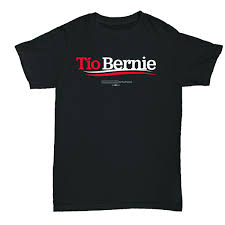
The Sanders campaign’s “Tamales for Tío Bernie” events are the culmination of this strategy. Every event is hosted by a local Latinx campaign volunteer who cooks for his or her community and invites them over to eat, chat, and learn a little about their favorite tío (uncle). Not only are these events original, they might also be crucial to Bernie’s success, since his campaign strategy relies heavily on high Latinx support and voter turnout.

(They also have these fun T-shirts that I’m weirdly obsessed with.)

The “Tamales for Tío Bernie” events are fairly small and low-key; typically, only fifteen or twenty people show up. But multiply those fifteen or twenty curious, motivated voters times the hundreds of homes hosting events and you just might be looking at the next President of the United States.

Whether or not Bernie’s campaign realizes it, their novel strategy is actually based on a basic biological principle: signal transduction cascades. Signaling – or biological communication – regulates everything that occurs in our bodies. Without cell signaling, we wouldn’t be able to move, breathe, think, feel . . . you name it, we couldn’t do it.

Signaling is usually regulated by first messengers, or “ligands,” that bind to membrane receptors on the outside of cell membranes. Each ligand can trigger its own signal transduction cascade. Each “Tamales for Tío Bernie” event is essentially a different ligand – a single event that can have an enormous ripple effect on the rest of the cell (in this case, American politics).

When the ligand binds the membrane receptor, the receptor becomes activated and changes shape. This conformational change is a visual metaphor for what the Sanders campaign hopes will happen in the minds of voters who attend the “Tamales for Tío Bernie” events. When they come in contact with this “ligand” and are around passionate, motivated, well-informed Bernie supporters, people might just “reshape” their attitudes towards Bernie.

In biology, once the membrane receptor has changed its shape, it can activate proteins inside the cell. And not just a single protein a single time – many proteins, many times. And then each of those proteins can activate even more proteins, and so on, forming the “cascade” effect. Just as these proteins can activate one another, so the Sanders campaign wants their supporters to infect each other with enthusiasm and passion for Bernie. If even five of the people at each “Tamales for Tío Bernie” event decide to vote and tell their friends that they support Bernie, he will have exponentially increased his base – all because of a few small community events in Latinx neighborhoods.

A signal transduction cascade results in a change within the cell; a “Tamales for Tío Bernie” cascade could result in a new U.S. President.

Can You Actually Be a Headass?

John Legend and Chrissy Teigen are basically the perfect couple.

He’s an incredible musician and she’s an actress, producer, and bestselling author. And they’re both ridiculously hot.

I mean, look at those smiles. Who better to make luxury fun, indeed?

In case you didn’t know, the two met when Chrissy was cast as the romantic interest in a music video John was filming. They started seeing each other casually, and then seriously, a transition marked by their first vacation to Lake Como, Italy. Classic first date spot. While there, Chrissy says that they went on a romantic boat tour to a little spot on the lake and were told to make a wish. “I asked for this to be the man I marry and have children with. I think John asked for the most perfect bite of cacio e pepe. Both came true, and here we are.”

Name a better love story, I’ll wait.

But even uber-successful, famous, beautiful people can’t be cool all the time. And luckily for their adoring fans, these two aren’t shy about admitting it. Several years ago, Chrissy Teigen posted this endearingly clueless tweet:

Oh Chrissy.

As it turned out, back in early 2017, a lot of people didn’t know what a headass was. It’s strange to think that a word that’s become ubiquitous in our modern vernacular once prompted this much confusion. But equally strange is the fact that no one seems to know how the insult originated. It just sprang into the public consciousness, fully formed, like Athena emerging from the head of Zeus. Except, well, a bit less dignified.

If you, like early 2017 Chrissy Teigen, are still wondering what a headass is, here’s the definition according to urban dictionary:

  1. A term used when one says something either obscured, unbelievable, or stupid (when trying to be funny)


2.   A term used at the end of an insult when talking about someone

But what does “headass” mean in the most literal sense? Someone with their head up their ass? Someone whose head is an ass? That isn’t even possible, right?

Wrong.

I can’t speak to the physical feasibility of sticking one’s head up one’s ass (although it seems highly unlikely), but I can say with certainty that it is possible for living organisms to have an ass where their head should be.

Meet Drosophila melanogaster, the original headass.

If you’ve taken a biology class, you’re probably encountered D. melanogaster, otherwise known as the common fruit fly. It’s a classic model organism – an organism that scientists study in the laboratory to learn about biological processes. What you might not know is that D. melanogaster’s development can be severely altered by a single gene: bicoid.

Bicoid is an egg-polarity gene, which means that it determines which part of the developing larvae becomes the anterior (front) end and which becomes the posterior (back) end. But how, you ask? By using a morphogen gradient. Now, this sounds complicated, but it’s actually quite simple. Think of bicoid as a dye. The end of the larvae that is most saturated with dye – the part with the darkest hue – is the end that has the greatest concentration of bicoid. It becomes the anterior, or front, end, and eventually develops a head. Bicoid slowly diffuses from the anterior end to the opposite end. Because that end is the lightest hue (aka the least saturated in bicoid), it becomes the posterior end, and eventually develops an ass.

Here’s where it gets fun.

Larvae with normal copies of bicoid develop normal anterior-posterior axes and develop into fruit flies like the one pictured above. But larvae with mutated bicoid genes turn out very differently. A bicoid mutation means that, for some reason, the fruit fly cannot produce a functional bicoid protein. If there is no functional protein, there is no anterior side, which means– the fly in question cannot produce a head at either end.

The mutated D. melanogaster therefore develops a posterior end where the head should have been and becomes – you guessed it – a literal headass.

Fortunately (or unfortunately, depending on your perspective), scientists have not attempted to see whether this phenomenon extends to humans. We are much more complex than this lovely model organism, so even if we could develop asses where our heads should be, it would take significantly more than mutating a single gene to do it. But it is fun – albeit gross – to contemplate.

Now, do I think the creators of the word “headass” had D. melanogaster and bicoid in mind? Probably not. But it does show that biology is a lot more closely intertwined with popular culture and language than you might have thought.

And as for Chrissy Teigen and John Legend, here’s how their conversation ended:

Like I said: the perfect (if occasionally headass) couple.

Create your own website, free on WordPress.com.Create your own website.
Start free