CW: Star Wars spoilers. (But if you don’t know by now . . . come on.)
It’s one of the most iconic lines in cinema. Five words that brought a generation of sci-fi nerds to their knees:
“Luke . . . I am your father.”*
Luke and Vader’s clash of wills is one of the central storylines in Return of the Jedi (the sixth Star Wars movie, for you non-nerds out there). Vader attempts to convince Luke to join the dark side, by turns cajoling and coercing him, but Luke stubbornly holds out hope that there is still goodness left in his father. In the climactic final moments, Emperor Palpatine (the dark side’s HBIC) entreats Luke to kill his father and become a Sith lord.
When Luke refuses to join the dark side, Palpatine begins to torture him. Darth Vader can’t bear to see his son murdered, so in a feat of desperation, he throws the Emperor down a reactor chute to his death . . . but is mortally wounded in the process. In the last moments of Vader’s life, he asks Luke to remove his mask, behind which his face looks weathered and white as the moon. He acknowledges that Luke was right – there was still good in him after all – and dies in his son’s arms. The perfect redemption arc.
Now, I love this storyline as much as anyone. But today I am positing a question that will terrify Star Wars fans everywhere: What if Darth Vader wasn’t Luke’s father? What if Luke had no biological father at all?
Sound crazy? For humans, maybe. But for some animal species, that’s just business as usual.
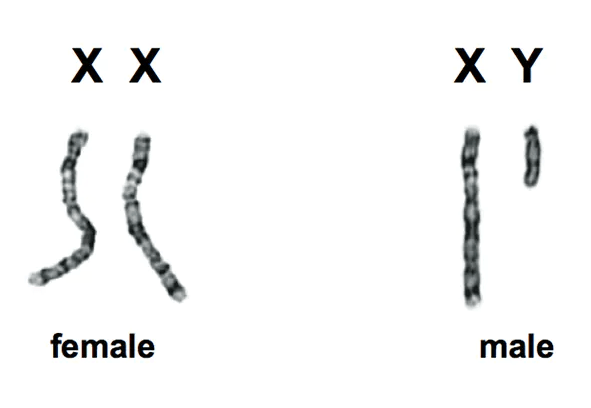
Most people are familiar with the human XX/XY sex determination system. Generally speaking, females inherit two X chromosomes (one from each parent), whereas males inherit one X chromosome from their mother and one Y chromosome from their father.
But most people are much less familiar with other animals’ sex determination systems, and that’s where things really get interesting.
Some animals, such as birds, amphibians, and certain insects, use the Z-W system of sex determination. In this system, only eggs contain sex chromosomes (rather than both eggs and sperm containing them, as in humans). Females’ genotypes, or genetic composition, are ZW and males’ are ZZ. The system that cockroaches, grasshoppers, and other insects use is even more different than ours; they only have one sex chromosome (X) and work off the X-0 system in which females have two X chromosomes (XX) and males have only one (X0). Sorry, males. But the system we’re going to focus on today is even stranger and more fascinating than either of these.
It’s called the haplo-diploid system, and in it, males have no fathers.

You heard me.
But how is that possible, you may ask? I was shocked at first, too. It sounded absurd to me, but most bees and ants have used this system of sex determination for millennia, so who am I to judge?
Here’s how it works.
Rather than specific sex chromosomes determining whether an offspring is male or female, the offspring’s sex is regulated by whether or not the gamete that produces them is fertilized. By “gamete,” I mean a cell that can unite with another cell from the opposite sex and eventually form offspring. For bees and ants, as for humans, that means eggs and sperm. In the haplo-diploid system, if sperm fertilizes a female’s egg, the resulting organism becomes a female. That female is diploid, meaning she has two copies of every chromosome. But if no sperm fertilizes a female’s egg, the egg still develops – and becomes a haploid male (with only one copy of each chromosome).
Can we all take a moment to appreciate that completely absurd biological phenomenon? The unfertilized egg still develops. If that happened in humans, we would flip our shit. Imagine getting pregnant without having sex every single month. It would be madness. But bees and ants do it all the time. The females have two biological parents; the males only have one. Wild.
Now, back to my initial question: What if Luke had no father at all?
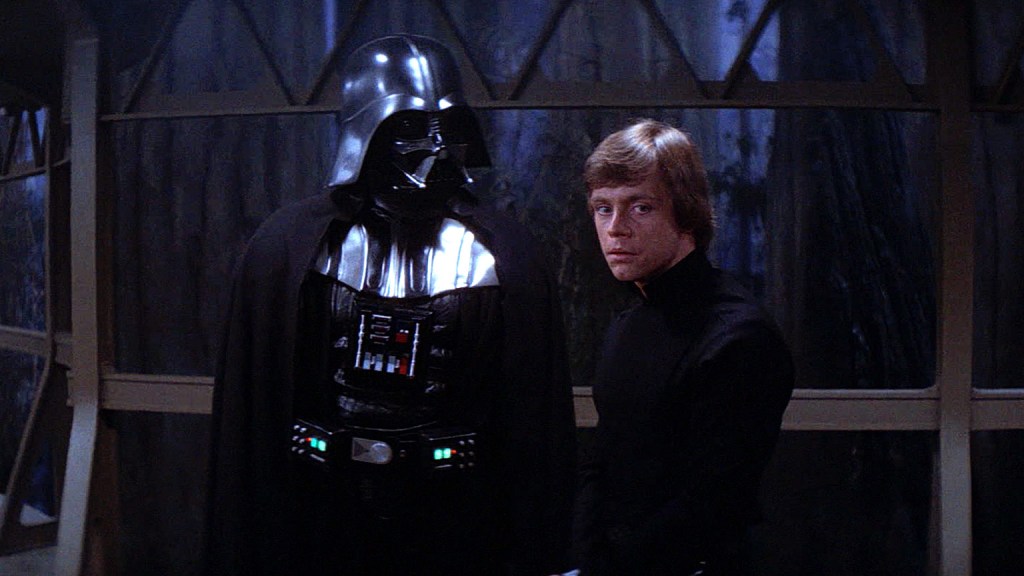
As humans, we naturally look to our parents for guidance (even if we subsequently ignore everything they say). Although Darth Vader wasn’t exactly around during Luke’s formative years, Luke’s indefatigable belief in his father’s goodness still guides his actions throughout the sixth Star Wars installment. Darth Vader’s final act – sacrificing himself to save his son – proves that not only can parents have powerful effects on their children, but children can also vastly alter their parents’ trajectories. Without Luke and Vader’s fierce struggle and eventual rapprochement, the Star Wars universe would lose one of its most tragic and beautiful narratives.
So, what if Luke had no father? He wouldn’t have been able to rid the world of a dangerous Sith lord. And if Darth Vader had no son, he likely would have been a member of the dark side until the day he died.
I guess what I’m saying is the haplo-diploid system is fascinating to learn about, but I prefer the XX/XY system, if only because I’m a sucker for a good character arc.
*Darth Vader actually says “No, I am your father” in response to Luke accusing the Sith lord of killing his dad, even though our collective cultural memory says otherwise. Mandela effect, anyone?
 Biology and Me