What does a septuagenarian white senator have in common with young Latinx voters?
It sounds like the beginning of an off-color joke, but it’s actually a question that presidential candidate Bernie Sanders takes quite seriously. Although he represents the largely homogenous and well-to-do state of Vermont (the population of which, in 2016, was 95.1% white), Bernie’s political agenda has always prioritized people who do not fit that profile. He has championed the same positions for decades (longer, in fact, than yours truly has been alive) and he has radically transformed the course of American politics.
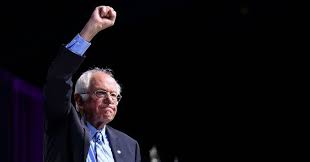
Bernie’s platforms, such as universal basic healthcare, used to seem so leftist they were almost ludicrous. Now, however, they are widely accepted by the mainstream Democratic party. He has shifted the Overton window – the range of policies politically acceptable to the general population at any given time – more than perhaps any other singular politician in our generation.
But a lot of voters still see him as a crotchety old white guy.
Which he is.
He’s a progressive, electable, funny, crotchety old white guy.
But rather than try to mansplain that distinction to voters, Bernie has recruited the people who are most likely to win over his detractors: their relatives and closest friends. The idea behind these small, intimate events is that people who have doubts about Bernie don’t want to hear him yell at a rally. They want to talk to people they know about concerns close to home – about their jobs, their economy, and their healthcare. They don’t want a stump speech; they want real answers from people they trust. And Bernie’s supporters are thrilled to help.
The Sanders campaign’s “Tamales for Tío Bernie” events are the culmination of this strategy. Every event is hosted by a local Latinx campaign volunteer who cooks for his or her community and invites them over to eat, chat, and learn a little about their favorite tío (uncle). Not only are these events original, they might also be crucial to Bernie’s success, since his campaign strategy relies heavily on high Latinx support and voter turnout.
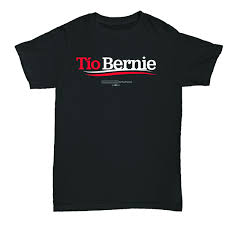
The “Tamales for Tío Bernie” events are fairly small and low-key; typically, only fifteen or twenty people show up. But multiply those fifteen or twenty curious, motivated voters times the hundreds of homes hosting events and you just might be looking at the next President of the United States.
Whether or not Bernie’s campaign realizes it, their novel strategy is actually based on a basic biological principle: signal transduction cascades. Signaling – or biological communication – regulates everything that occurs in our bodies. Without cell signaling, we wouldn’t be able to move, breathe, think, feel . . . you name it, we couldn’t do it.
Signaling is usually regulated by first messengers, or “ligands,” that bind to membrane receptors on the outside of cell membranes. Each ligand can trigger its own signal transduction cascade. Each “Tamales for Tío Bernie” event is essentially a different ligand – a single event that can have an enormous ripple effect on the rest of the cell (in this case, American politics).
When the ligand binds the membrane receptor, the receptor becomes activated and changes shape. This conformational change is a visual metaphor for what the Sanders campaign hopes will happen in the minds of voters who attend the “Tamales for Tío Bernie” events. When they come in contact with this “ligand” and are around passionate, motivated, well-informed Bernie supporters, people might just “reshape” their attitudes towards Bernie.
In biology, once the membrane receptor has changed its shape, it can activate proteins inside the cell. And not just a single protein a single time – many proteins, many times. And then each of those proteins can activate even more proteins, and so on, forming the “cascade” effect. Just as these proteins can activate one another, so the Sanders campaign wants their supporters to infect each other with enthusiasm and passion for Bernie. If even five of the people at each “Tamales for Tío Bernie” event decide to vote and tell their friends that they support Bernie, he will have exponentially increased his base – all because of a few small community events in Latinx neighborhoods.
A signal transduction cascade results in a change within the cell; a “Tamales for Tío Bernie” cascade could result in a new U.S. President.
 Biology and Me